A comfortable sofa often feels like the centerpiece of a home. It offers a place to relax, gather with family, and unwind after a long day. But over time, even the most cherished pieces of furniture can start to show signs of wear and tear.
One common problem I see with older or heavily used sofas is sagging. This often comes from broken or weakened springs inside the cushions. When your sofa no longer offers the support it once did, it can make sitting uncomfortable and detract from your living space.
I understand how frustrating a broken sofa spring can be. Replacing broken springs inside sofas might seem like a daunting task. With the right approach and some practical knowledge, you can often restore your favorite couch to its former glory. This guide will walk you through the process, covering everything from understanding spring types to a step-by-step repair method.
Understanding Sofa Springs and Their Role
Sofa springs are the unsung heroes of your furniture. They provide the bounce and support that make your couch comfortable. Different types of springs exist, each with its own benefits and common failure points. Knowing which type you have is the first step in successful repair.
The frame of your sofa works together with the springs to create a stable seating surface. When one part fails, the whole system suffers. Understanding these basics helps you troubleshoot problems effectively and choose the right replacement parts.
Common Types of Sofa Springs
I have worked with many sofas over the years. I can tell you that most residential sofas use a few primary types of springs.
- Sinuous Springs: These are S-shaped coils that run from the front to the back of the sofa frame. They attach with clips and often look like wavy lines. These springs offer good support and durability. They are quite common in modern furniture designs.
- Coil Springs: Often found in high-end or older traditional sofas, coil springs are individually tied eight-way springs. They are very durable and offer a luxurious feel. These springs are more complex to install or replace.
- Webbing Support: Some sofas use a heavy-duty fabric or rubberized webbing stretched across the frame instead of metal springs. This method provides firm support. Over time, the webbing can stretch or break.
Each type requires a slightly different repair technique. For example, sinuous springs might just need a new clip if they detached. Coil springs usually need full replacement if they break. Webbing can be replaced by re-stretching new material.
How Springs Provide Comfort
The springs under your cushions do more than just hold things up. They absorb pressure and redistribute weight. This action prevents you from sinking too deeply into the sofa. Good springs create a resilient surface that bounces back when you stand up. When springs fail, the cushioning loses its foundation. This leads to a noticeable sag. You might feel the frame through the cushions. This also causes discomfort and uneven seating.
Why Sofa Springs Break and What to Look For
Sofa springs do not just break without reason. There are several factors that contribute to their eventual failure. Identifying the cause can sometimes help prevent future issues. It also guides you in assessing whether a DIY repair is feasible or if you need professional help.
I have seen springs give out from various types of stress. Understanding these common reasons helps homeowners know what to expect. It also lets them address problems quickly when they arise. Ignoring a broken spring for too long can put stress on other parts of the sofa.
Age and General Wear
Like anything else in your home, sofa springs have a lifespan. With consistent use, the metal can fatigue and weaken. This is especially true for sinuous springs which constantly flex. Over time, rust can also play a part. This corrosion weakens the metal further. Eventually, a spring might snap or lose its tension completely.
Regular maintenance can extend the life of your sofa springs. However, age is a natural enemy. Springs in heavily used areas of the sofa often wear out faster than those in less used spots.
Overuse and Improper Weight Distribution
One of the biggest culprits behind broken springs is excessive weight or uneven distribution of weight. If several people sit on one section of the sofa regularly, those springs bear a disproportionate load. Jumping on the sofa, even by children, can also put extreme stress on the springs. This leads to premature failure.
I always suggest rotating seating spots on a sofa. This helps distribute wear across all springs and cushions. Avoiding sudden impacts or heavy loads on specific sections can significantly prolong your sofa’s life.
Gathering Your Tools and Replacement Materials
Before you start replacing broken springs inside sofas, you need to gather all the necessary tools and materials. Having everything ready beforehand makes the process much smoother. It also helps avoid interruptions once you begin disassembling your sofa.
I always advise people to be prepared. A small investment in the right tools can save you a lot of time and frustration. It also ensures a safer and more effective repair. You do not want to realize you are missing a critical item halfway through the project.
Essential Tools for Spring Repair
You will need a few basic tools to tackle this project.
- Pliers or wire cutters: For bending or cutting old springs.
- Screwdriver set: For removing screws on the sofa’s dust cover or frame.
- Staple remover or tack puller: To carefully remove upholstery staples without damaging the fabric.
- Heavy-duty staple gun: For reattaching fabric. Make sure you have plenty of staples.
- Work gloves: To protect your hands from sharp metal edges and staples.
- Safety glasses: Eye protection is always a good idea.
- Flashlight or headlamp: For better visibility inside the sofa frame.
These tools are generally easy to find at hardware stores. They are useful for other home projects as well.
Replacement Springs and Upholstery Fabric
You also need the right replacement parts. This includes new springs matching the type already in your sofa. You can often find these online or at upholstery supply stores. If your springs are sinuous, make sure to get the correct gauge and length.
Additionally, you might need extra upholstery fabric. This is for patching or replacing sections of the dust cover. Also consider getting upholstery thread and needles for any hand-stitching. If you are uncertain about the type of spring you need, you can always take a broken one to an upholstery supply store for a match.
Step-by-Step Guide to Replacing Broken Springs
Now that you have your tools and materials ready, it is time to get started. This step-by-step guide will walk you through the process of replacing broken springs inside sofas. Take your time with each step and prioritize safety.
I find it helpful to take pictures as I go. This helps remember how everything looked before disassembly. These photos can be a useful reference during reassembly. Remember, patience is key for successful furniture repair.
Preparing Your Sofa for Repair
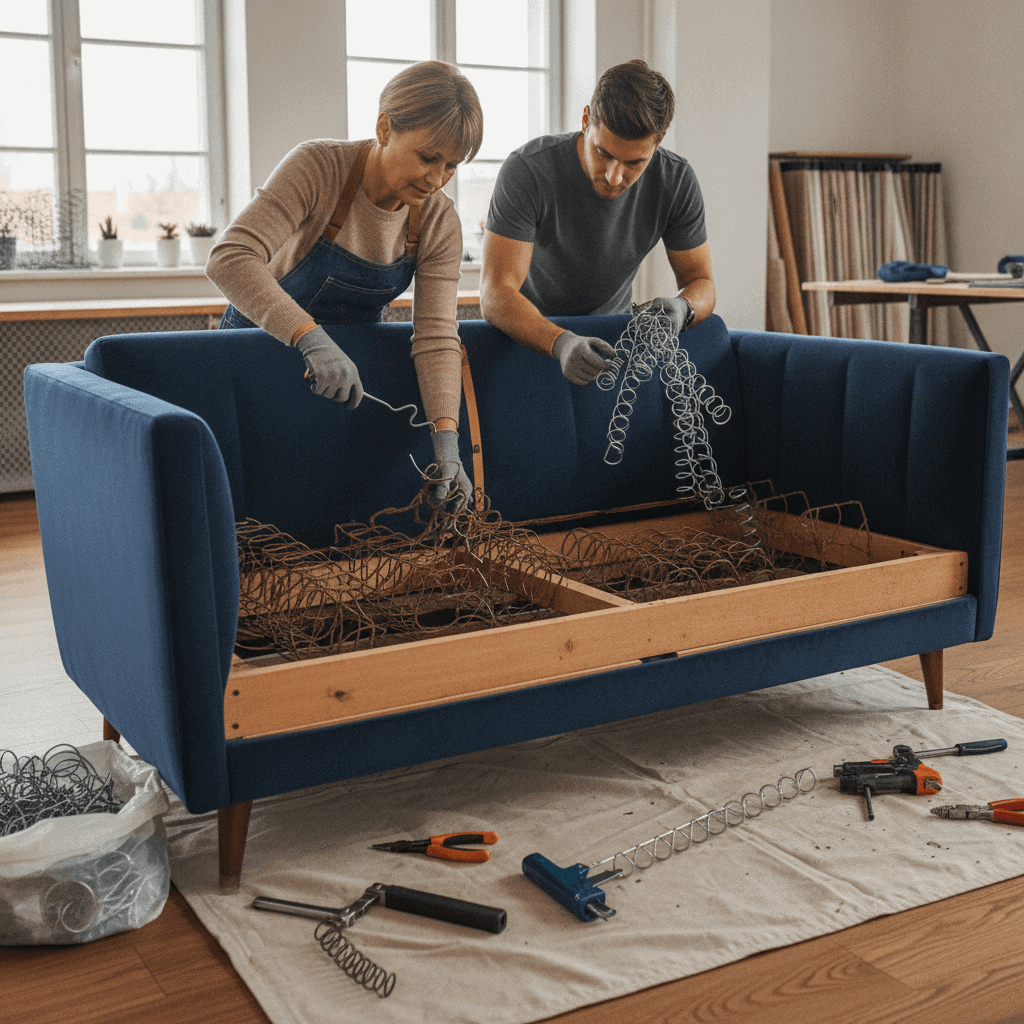
First, move your sofa to an open area where you have plenty of space to work. Lay down a drop cloth or old blanket to protect your floor. Remove all cushions and pillows from the sofa. Next, carefully turn the sofa over so its base faces upwards. You will see a black dust cover stapled to the bottom of the frame. This cover needs to be removed to access the springs.
Use your staple remover or tack puller to gently pry off the staples holding the dust cover. Be careful not to tear the fabric too much if you plan to reuse it. Once the cover is off, set it aside. This exposes the internal frame and springs.
Accessing and Removing the Broken Springs
With the dust cover removed, you can clearly see the springs. Identify which springs are broken or bent out of shape. You might see a spring completely detached or one that has lost its curve. For sinuous springs, they are usually held by clips on the frame. Use pliers to unbend these clips or simply detach the broken spring from its mounting point. Sometimes, the clip itself is broken. You will need to replace both the spring and the clip in that case.
If you have coil springs, they are often tied together with twine and secured to the frame. You might need wire cutters to cut the old twine and remove the broken coil. Always wear work gloves during this step to protect your hands from sharp metal edges. Carefully remove any remaining staples or remnants of the old spring components from the frame.
Installing New Springs and Reassembling
Now, install the new springs. If you are replacing a sinuous spring, attach the new spring to the frame using new clips. Make sure the spring is taut but not overly stretched. For coil springs, you will need to tie them into place and connect them to other coils. This is a more intricate process that often requires specific upholstery knotting techniques.
Once all new springs are securely in place, check them for tension and alignment. Ensure they offer even support. Then, it is time to reattach the dust cover. Align the old dust cover or a new piece of fabric over the bottom of the frame. Use your heavy-duty staple gun to staple it back into place. Work your way around the edges. Make sure the fabric is taut and neatly attached. Finally, flip your sofa back upright and replace the cushions.
When to Call a Professional for Sofa Spring Repair
While many sofa spring repairs can be a do-it-yourself project, there are times when calling a professional is the smarter choice. I have seen many instances where attempting a complex repair without the right skills or tools leads to more damage or an unsatisfactory result. It is important to recognize your limitations and seek expert help when necessary. This ensures your sofa gets the best possible repair and remains a comfortable fixture in your home for many years to come.
Sometimes the issue is not just a single broken spring. There could be multiple underlying problems with the sofa’s structure. A professional can diagnose these issues accurately. They also have access to specialized tools and materials. This allows for a more comprehensive and durable repair.
Complex Spring Systems
Some high-end or antique sofas feature intricate spring systems. Eight-way hand-tied coil springs are a prime example. These systems involve many individual coils each tied by hand at eight different points. Repairing these requires specific expertise in upholstery techniques. If you have such a sofa, trying to fix it yourself could cause more harm than good. A professional upholstery technician has the skills and experience to handle these complex repairs properly. I always recommend considering expert service for delicate or valuable furniture pieces.
The complexity is not just about the springs themselves. It is also about how they interact with the frame and other support elements. Getting these connections just right ensures the sofa retains its original comfort and integrity. DIY solutions might offer a temporary fix but may not last.
Extensive Damage or Structural Issues
If your sofa has more than just a broken spring, calling a professional is a good idea. This includes issues like a cracked or warped frame, widespread spring failure, or significant damage to the upholstery fabric. These problems need specialized attention and may even require partial deconstruction of the sofa. A professional can assess the full extent of the damage. They can provide a comprehensive repair solution. This often involves more than just replacing a single part. It might be time for expert assistance when you are facing these bigger issues. For complex issues or when you need reliable broken spring repair in Phoenix AZ, professional services can restore your furniture expertly. Visit https://azcouchcare.com/services/broken-spring-repair-in-phoenix-az/ to learn more about professional repair options.
Maintaining Your Sofa Springs for Longevity
Once you have gone through the effort of replacing broken springs inside sofas, you will want to keep them in good condition. Proper maintenance helps prolong the life of your springs. It also ensures your sofa remains comfortable and supportive for many years. Simple habits can make a big difference.
I have learned that prevention is always better than repair. A little attention to how you use and care for your sofa can save you from future spring problems. These tips are easy to incorporate into your daily routine. They help keep your furniture feeling new.
Regular Cleaning and Inspection
Keeping your sofa clean helps in more ways than just appearance. Dust and debris can accumulate in the crevices and around the springs. This leads to friction and wear. I recommend vacuuming under the cushions regularly. This also gives you a chance to inspect the springs. Look for any signs of sagging, rust, or loose connections. Catching a problem early can prevent it from worsening into a full break.
A quick check every few months is enough. This proactive approach allows you to address minor issues before they become major repairs. Cleanliness also contributes to the overall hygiene and feel of your living space.
Even Weight Distribution and Usage
One of the easiest ways to maintain your sofa springs is to distribute weight evenly across the seating area. Avoid consistently sitting in the same spot. This puts undue stress on a specific set of springs. If you have multiple people using the sofa, encourage them to spread out. Periodically rotate your cushions. This helps ensure that wear and tear are distributed. This simple practice helps all the springs work together effectively.
Also, try to avoid actions that put sudden impacts on the springs. For example, do not drop heavily onto the sofa or let children jump on it. These sudden forces can bend or break springs instantly. Gentle use and even weight distribution will keep your sofa’s support system strong.
Conclusion on Replacing Broken Springs Inside Sofas
Dealing with a sagging sofa because of broken springs can certainly be a nuisance. However, as I have shared, replacing broken springs inside sofas is often a manageable task for the diligent homeowner. We have explored the different types of springs you might encounter. We have also discussed why they fail. Knowing these details helps you diagnose the issue accurately. My hope is that this guide provides you with the confidence and practical steps to tackle this repair yourself. From gathering the right tools to carefully installing new springs, each stage of the process is important for a successful outcome. Always remember that proper maintenance, such as even weight distribution and regular inspections, will significantly extend the life of your newly repaired sofa. It is a worthwhile investment of your time to restore comfort and function to a cherished piece of furniture. If the repair seems too complex, or if your sofa has extensive damage, seeking professional help is a wise decision to ensure the best results. Take action today to bring back the comfort and support your sofa once offered. Your back will surely thank you for it.